Whitepaper
Multilingual Data Provenance & Sovereignty reference
A reference on consent, residency and provenance for multilingual AI data — what data sovereignty requires for regulated and low-resource-language programs.
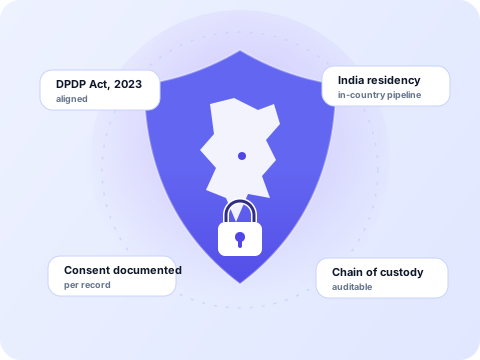
For regulated and low-resource-language data, sovereignty is what makes a dataset usable at all. This reference defines what we mean by data sovereignty and how it's built into every sovereign program.
Consent
Informed consent captured in the contributor's language, recorded per contributor, with de-identification where required.
Residency
Data collected, processed and stored in-jurisdiction, with no cross-border transfer of sensitive data for sovereign programs.
Provenance
Provenance and chain of custody tracked per record, so the dataset is auditable end to end and defensible in a procurement or compliance review.
Why it matters for low-resource languages
The communities whose languages are least represented are often the most exposed to extractive data practices. Consent, residency and provenance are how a proprietary low-resource dataset is built responsibly — and why this discipline carries forward as we extend into multimodal and embodied data.
About this reference
Questions about provenance and sovereignty
- What does data sovereignty include?
Consent captured per contributor, residency in-jurisdiction, and provenance tracked per record — the three together, not residency alone.
- Is this only for government buyers?
No. Any regulated program — and any responsible low-resource-language dataset — benefits from consent, residency and provenance built in from the first record.
- Can you keep data resident in India?
Yes. We offer an India-residency / sovereign delivery option. See Sovereign data.